

According to the article Interactive Fabrication published by Karl DD.willis, Cheng Xu, Kuan Ju Wu, Golan Levin, MarkD Gross.
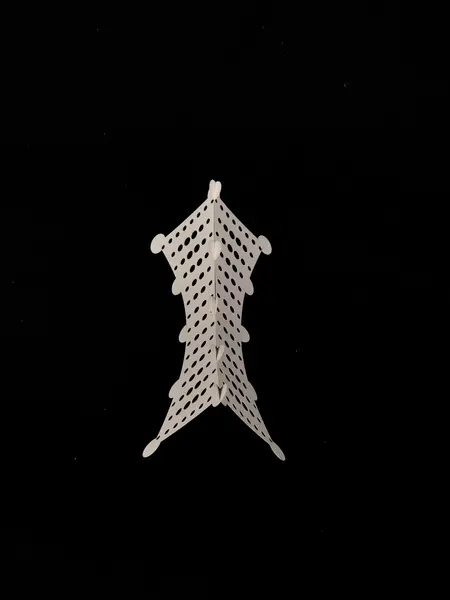
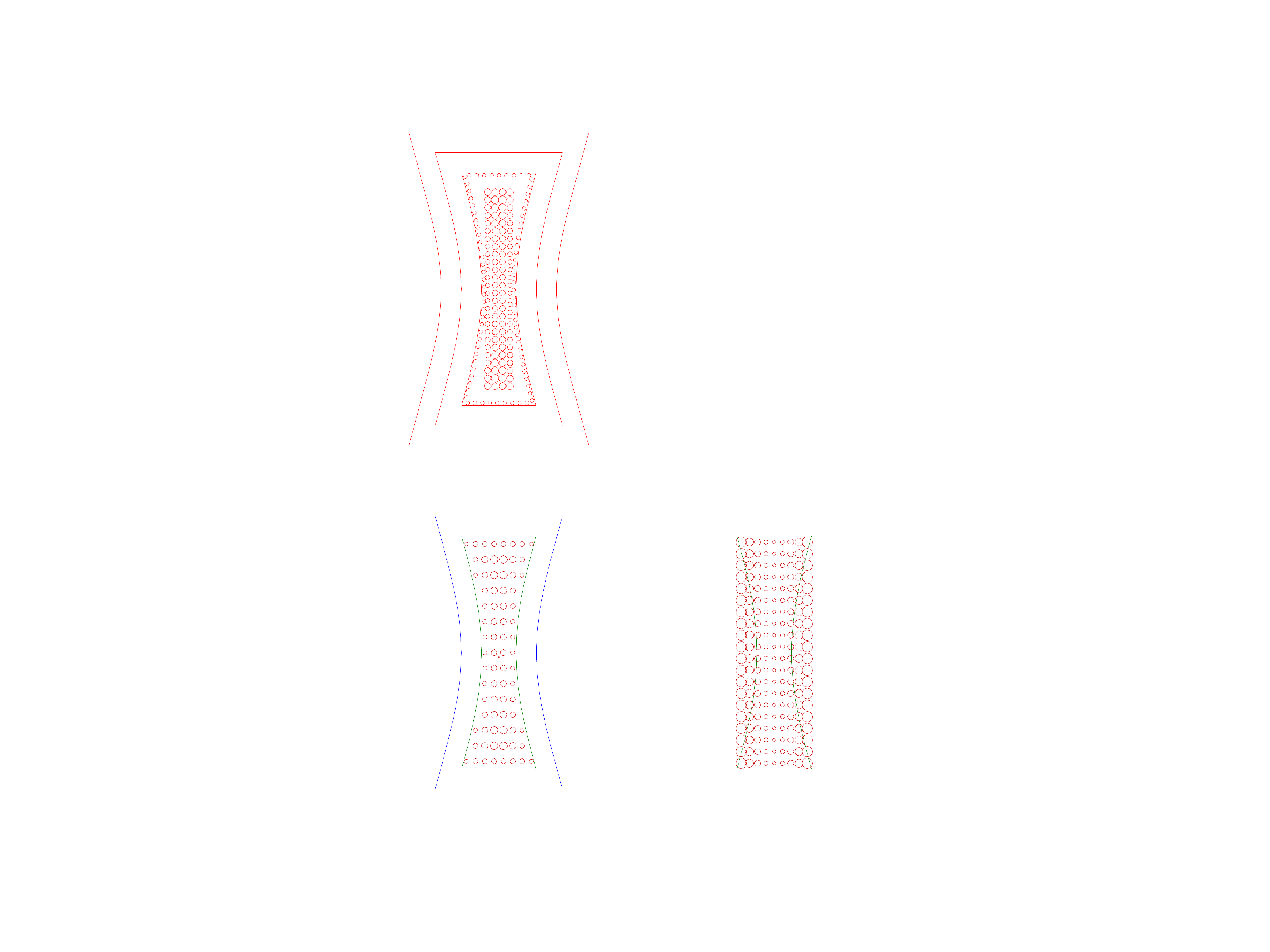
According to the article Interactive Fabrication published by Karl DD.willis, Cheng Xu, Kuan Ju Wu, Golan Levin, MarkD Gross. The current digital fabrication model inputs the designer’ instruction, abstracting it to the digital space and generating its result. The connection between interactive workflow and digital fabrication is established by the fact that the qualitative input can be quantified. These quantified data could then become spatialized by imputing x,y, and z coordinates distinguished by numbers. Through mapping a texture onto a developable surface, the rotational geometry allows for a more complex gradient pattern to be mapped and customized by calculating the distance to the closest point on the curve and changing the position of the curve according to the points on the surface. This method allows real-time changes visible in Rhino 3D space while making design decisions. Although the process of fabrication could not be made visible simultaneously once laser cutters make a cut for bristol paper, the process is irreversible, the only way to make adjustments is to adjust in digital space and reprint. I think the selection of tools to transform qualitative data into numbers becomes more important along with the tools of fabrication. Interactive workflows are codes that become a medium for the integration of thought processes and results. These tools then shape the design outcomes through iterative processes and eliminate labor involved in the process of visualization.